Heat Press Guide: Types, Sizes and Picks to Compare
A heat press guide should start with your projects: compare platen size, opening style, pressure controls and the materials you plan to press. Choose a 15 x 15 in machine for larger shirt graphics, a 12 x 10 in press for smaller designs, or a multi-attachment press for projects that use hats, tumblers or plates.
On this page (8 sections)
A heat press guide should start with what you plan to make and how often. Match the platen size to your largest regular design, then compare the press style, pressure controls and any attachments you need.
A 15 x 15 in flat press offers a broad work area for shirt graphics. If you want a smaller press or plan to decorate shaped items, compare compact and multi-attachment options before deciding.
What does a heat press do?
A heat press uses a heated platen and pressure to apply a transfer to a material for a set time. The right settings depend on the transfer and blank, so follow the material supplier's instructions.
Heat presses work with heat transfer vinyl (HTV), sublimation transfers and other compatible transfer materials. A machine's temperature range alone doesn't tell you whether a particular material is suitable.
If you're new to the process, our guide to what a heat press is and how it works explains the basic parts and pressing cycle. For shirt projects, see how to heat press a shirt step by step.
Which heat press type fits your projects?
Choose a flat press for apparel and flat blanks, and consider a multi-attachment model if you regularly decorate curved or shaped items. The opening style affects how you load projects and how much clear space the machine needs.
| Type | How it opens or works | Consider it for |
|---|---|---|
| Clamshell | Top platen lifts upward | Shirt work in a space with limited room behind the press |
| Swing-away | Heated platen moves to the side | Easier access to the lower platen while positioning a project |
| Automatic | Press closes and may release on its own | Repeated transfers where automatic operation suits your workflow |
| Multi-attachment | Uses interchangeable pressing parts | Projects that include items such as hats, tumblers or plates |
| Compact handheld press | A smaller heated surface that you move over the project | Small designs and craft projects where a full platen isn't needed |
These categories can overlap. For example, a clamshell may have automatic operation, while a multi-attachment machine may use a swing-away design.
Compare the mechanics in our clamshell vs swing-away heat press guide. If you're weighing a compact craft press against a full machine, read Cricut EasyPress vs a full heat press.
Is a clamshell heat press a good fit?
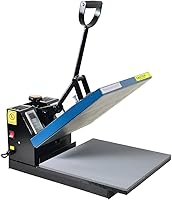
A clamshell is worth considering when you want an upward opening motion and have limited space behind the machine. Its top platen lifts, so plan for overhead clearance and keep your hands clear of hot surfaces.
A fixed lower platen can be simple to work with, but loading a shirt may take more repositioning than with a pull-out platen. Check how much access the design gives you before choosing.
When should you choose a swing-away heat press?
A swing-away press makes sense when you want the heated platen to move aside while you position a garment or blank. That movement needs open space beside the machine, so measure the work area in the direction the platen swings.
This style can be useful when a project's shape or thickness makes loading awkward. A swing-away design does not by itself guarantee even pressure, so compare the press's pressure adjustment and platen setup too.
What does an automatic press change?
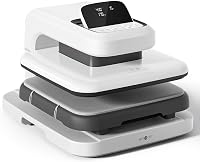
An automatic press can reduce the steps you take during each press. The HTVRONT Auto Heat Press 15x15 uses a sliding board and a button to start the cycle, adjusts to projects up to 1 in thick, and releases when the timer ends.
Automation doesn't choose the correct time or temperature for your transfer. Set the machine according to the material instructions and stay nearby while it operates.
What platen size should you choose?
Choose a platen based on your largest design that you make often, not a rare project. The platen needs to cover the transfer area while leaving room to position the garment and avoid seams or bulky areas.
A 15 x 15 in platen provides a broad flat area for larger shirt graphics. A 12 x 15 in or 12 x 10 in platen may fit smaller work and take up less bench space, but it can require repositioning for wide designs.
Measure both the press and the garment. A design that fits the platen can still be difficult to press if a pocket, seam, zipper or thick edge sits under the heated area.
Also check the machine's outside dimensions, weight and clearance needs. A press that fits on a bench may still need extra room for the handle, drawer or swing-away motion.
Which controls and pressure features matter?
Look for controls that let you set the time and temperature your transfer instructions require. A pressure adjustment or display can help you manage pressure, but it does not replace checking a result on a suitable scrap piece.
Some presses include a digital display for time and temperature. The HTVRONT 12x10 Pressure Display Press also has a built-in sensor that displays pressure data, while the Delclynee 15x15 includes an adjustable pressure knob and a digital gauge.
Pressure needs vary with the material stack and transfer method. Our guide to how much pressure a heat press needs covers the factors that affect pressure and how to check your result.
Four heat presses to compare
These four options cover automatic operation, a larger clamshell platen, a multi-attachment setup and a smaller press with a pressure display. The scores weigh specs, features and buyer feedback against what you're shopping for.
HTVRONT Auto Heat Press 15x15
The sliding board keeps the project separate from the heating plate while you load it. HTVRONT describes four fast modes, two custom modes and an auto mode.
Consider this model if you want a large platen and automatic pressing for apparel and other flat projects. It weighs 40.3 lb, so plan a stable place to set it up.
Delclynee 15x15 High Pressure Clamshell
The lower platen is stationary, and the design leaves room to thread a shirt beneath it. Its automatic floatation feature is intended to balance the top platen over uneven or thicker items.
Consider it if you want a large flat platen and manual pressure adjustment. Make room above the press for the clamshell to open.
Slendor 12x15 5-in-1 Swing-Away Press
The set includes a hat press, a tumbler press and two plate presses alongside the shirt platen. The swing-away design moves the heating element aside, so allow space beside the machine for that movement.
Consider it if you expect to make both flat apparel transfers and projects that use its included attachments. Check each attachment's size and shape against your blanks before buying.
HTVRONT 12x10 Pressure Display Press
The pressure display shows pressure data alongside time and temperature. The smaller platen may suit craft work and smaller apparel designs, while wide graphics may need careful planning or repositioning.
Consider it if pressure feedback is useful to your process and a 12 x 10 in work area covers your regular designs. Its weight is 4.35 kg, so plan for a stable work surface.
What else should you check before buying?
Check the space, power and materials your setup requires before choosing a machine. A good match on platen size can still be inconvenient if the press doesn't fit your work area or the transfer needs an attachment you don't have.
- Workspace: Measure the press footprint and the room needed to open or move its platen.
- Garment access: Look for a threadable or sliding lower platen if you need to position shirts around seams and pockets.
- Power: Check the machine's voltage and the outlet available where you'll use it.
- Attachments: Confirm which parts are included and whether they fit your mugs, hats or plates.
- Safety: Review how hot parts are separated from your hands, whether the press has an insulated base and how it signals the end of a cycle.
- Material instructions: Confirm that your transfer method and blank are compatible, then use the supplier's recommended settings.
A press doesn't make every material suitable for heat transfer. For polyester garments, read how to heat press polyester without scorching it and follow the transfer supplier's guidance.
Which heat press should you choose?
Pick the HTVRONT Auto Heat Press 15x15 if you want a broad shirt platen and automatic release. Choose the Delclynee for a 15 x 15 in clamshell with manual pressure adjustment, or the Slendor if its included hat, tumbler and plate attachments match your projects.
Choose the HTVRONT 12x10 if a smaller work area and pressure display matter more than a full 15 x 15 in platen. To compare more models, browse our best heat presses for home and small shops and best 15x15 heat presses.
Related heat press questions
Can I use one heat press for HTV and sublimation?
Some flat presses can be used with both HTV and sublimation transfers when the press, blank and transfer are compatible. The required temperature, time and pressure vary by method and material, so follow the transfer supplier's instructions.
Compare the differences in our HTV vs sublimation guide.
Do I need a separate press for hoodies?
Not always, but thick garments can create uneven surfaces around seams and pockets. Check whether the press has enough clearance and whether a pressing pillow can help lift the design area above bulky seams; see our heat press pillow guide and hoodie heat pressing steps.
Is a bigger platen always better?
A bigger platen helps when you regularly press large designs, but it takes more bench space and may be unnecessary for small graphics. Choose the smallest platen that comfortably covers your regular work, then account for garments, seams and positioning room.
Should I buy a heat press for a small business?
Choose a machine around your actual order mix and work pace. A larger platen or automatic cycle may help with repeated apparel work, while a multi-attachment press suits a business that also sells items such as hats or mugs.
Compare the heat press choices for a T-shirt business before scaling up.
Frequently asked questions
What size heat press should I buy?
Choose a platen that fits your largest regular design, with enough room to position the garment. A 15 x 15 in platen suits many large shirt graphics, while a 12 x 10 in press can suit smaller designs and craft spaces.
Check the machine's full dimensions and the space needed to open it.
Is a clamshell or swing-away heat press better?
A clamshell opens upward and can take less room behind the machine, while a swing-away platen moves aside and gives you clearer access to the lower platen. Either style can work for shirts.
Choose based on your workspace, loading habits and the materials you plan to press.
Do I need an automatic heat press?
An automatic press can close and release with less manual handling, which may help if you make repeated transfers. A manual press gives you direct control over closing and opening.
Compare the controls, safety features and workspace needs before choosing.
Can one heat press handle shirts, hats and mugs?
Some multi-attachment presses include separate parts for shirts, hats, mugs or plates, but each attachment has its own setup and limits. Check which attachments are included and whether their shapes fit your blanks.
A flat press alone won't wrap evenly around a mug.