Clamshell vs Swing-Away Heat Press: Which Is Better? (October 2026)
Choose a clamshell press if an upward-opening design fits your work area; choose a swing-away if you want the heated plate to move aside. For clamshell vs swing away heat press decisions, start with your available clearance, project size and the items you plan to press.
On this page (10 sections)
- Clamshell vs swing-away heat press: how do they open?
- Which style takes less room?
- Which press style makes transfer placement easier?
- Which platen size fits your designs?
- Which models match each press style?
- How should you set up a heat press?
- What common mistakes should you avoid?
- What should you check before choosing?
- Which opening style should you choose?
- How do these presses compare?
For clamshell vs swing-away heat press choices, pick the upward-opening style when overhead clearance works and the swing-away when you want the heated plate moved aside for setup. Your room, transfer placement and project mix matter as much as the press style.
A clamshell's upper platen lifts on a hinge, while a swing-away arm rotates the heated plate away from the lower platen. Both can press shirts, but they ask for different clearances and put the hot plate in different places while you load a garment.
We compared the designs and checked the features of 3 presses. For more context on press types and sizes, start with our heat press guide.


Clamshell vs swing-away heat press: how do they open?
A clamshell lifts its top platen upward; a swing-away rotates the heated plate to the side. The movement determines where you need open space and how you reach the garment.
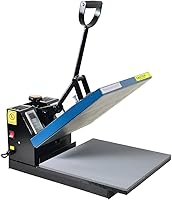
With a clamshell, the top platen stays attached at the back and opens upward. The Fancierstudio Digital Heat Press 15x15 uses this layout, which saves space, but it still needs overhead clearance when open.
A swing-away arm moves the hot plate away from the lower platen. The HTVRONT plate swings 180 degrees, while the Slendor turns 360 degrees.
This leaves the lower platen open while you arrange a shirt or transfer. You need clear floor or bench space for the arm's movement, and you should check that shelves, walls and nearby equipment won't block its path.
Which style takes less room?
An upward-opening press needs room above it, while a swing-away needs room for its rotating arm. Compare the full working area rather than judging by the machine's closed footprint.
A clamshell may suit a bench with open space above it. The Fancierstudio is described as compact, but its raised platen still needs room to open without hitting a shelf or overhead cabinet.
A swing-away can need more clear area beside the base. The plate moves across that space, so leave room to rotate it and stand at the press without leaning over the hot surface.
Before buying, mark the press base and opening path with tape. Then check whether you can stand comfortably, load a shirt and reach the controls with the press in both its open and closed positions.
Skip a swing-away if a wall or neighboring machine would block its movement. Skip a clamshell if overhead shelves leave too little headroom for its raised platen.
Which press style makes transfer placement easier?
A swing-away gives you an unobstructed lower platen during setup; a clamshell keeps the upper platen hinged above the work area. Your preferred reach and the size of your design can help settle the choice.
With a clamshell, lay the garment flat and position the transfer before lowering the upper platen. Keep your hands clear as you close the hot press, and plan how to lower it without shifting the transfer.
With a swing-away, rotate the heated plate aside, arrange the garment and transfer, then move the plate back over the pressing area. Seeing the full lower platen can help with placement, especially when you need to smooth or align a larger shirt panel.
Neither opening style guarantees an even transfer. Pressure, time, temperature, garment seams and the instructions for the transfer all affect the pressing process.
Our guide to heat press pressure settings explains how pressure fits into the process.
Which platen size fits your designs?
Choose a platen that covers your largest transfer and leaves enough space to position it accurately. A wider work area can handle bigger layouts, but also calls for a suitable bench and clearance.
The Fancierstudio and HTVRONT both have 15 x 15 in platens. The Slendor's shirt platen is 12 x 15 in, which may work for smaller graphics but offers less width.
Measure the largest design you expect to press, including any placement margin. The full transfer should sit flat inside the platen area rather than crossing its edge.
A larger platen does not remove the need to arrange a shirt carefully. Keep collars, side seams and pockets from creating raised areas under the transfer, and use a pressing pillow when appropriate for bulky areas.
If hoodies are a regular project, account for their thickness and seams before choosing a press. Our guide to how to heat press a hoodie covers garment placement.
Which models match each press style?
The Fancierstudio opens upward, while the HTVRONT and Slendor move the heated plate aside. Choose among them by the platen size, attachments and controls you will actually use.
Fancierstudio: an upward-opening press for a compact workspace
The Fancierstudio Digital Heat Press 15x15 pairs a 15 x 15 in platen with electronic time and heat controls. It also has adjustable pressure and a silicon-gel base board.
Its upward-opening design saves space, so it can suit a buyer who has overhead clearance but limited room for a side-swinging arm. It may not suit a bench under low shelves or a setup where the raised platen would obstruct access.
The press has a 110-volt supply and 1800 watts of power. The platen has a Teflon coating, and the base board is silicone gel.
Slendor: a swing-away press for different item shapes
The Slendor has a 12 x 15 in shirt platen and a 360-degree swing-away design. Its 5-in-1 set includes a hat press, a 30 oz tumbler press and two plate presses.
Choose it if you expect to press different shapes and have room to store the attachments. Skip it if you mainly make wide shirt designs or don't want to switch parts and make space for them.
The lower platform detaches, and pressure adjusts for material thickness. Its digital control handles temperature from 0 to 482°F and time settings from 0 to 999 seconds.
Follow the instructions for each transfer and blank when choosing settings.
HTVRONT: a swing-away press with a wider shirt platen
The HTVRONT pairs a 15 x 15 in platen with a 180-degree swing-away plate. Its pressure knob adjusts for material thickness, and a separate control panel connects by a 1 m cable.
The temperature range is 104–410°F. Check that this range covers the settings required by the transfers and materials you plan to use before choosing it.
It shuts off automatically after 15 minutes of inactivity. It suits a shirt maker who wants a swing-away layout and a wider platen, but not someone who needs the Slendor's extra attachments.
How should you set up a heat press?
Set the press on a stable surface, clear its opening path and confirm the transfer instructions before heating. The right setup gives you room to arrange the garment while keeping hands and loose items away from the hot platen.
Start by measuring the base and full opening movement. Place a clamshell where its upper platen can lift freely, or leave enough side clearance for a swing-away arm to rotate without hitting a wall or other equipment.
Keep the work surface flat and stable. Make a clear spot for the garment, transfer and any tools you need, so you don't have to reach over the heated plate during setup.
Set time and temperature based on the transfer and blank instructions. The correct values depend on the materials, so avoid assuming that one setting works for every shirt, vinyl or transfer type.
Adjust pressure to suit the material thickness and arrange the garment so seams, collars and pockets don't interfere with the press area. For additional setup ideas, see our guide to heat press accessories.
What common mistakes should you avoid?
The main mistakes are underestimating clearance, choosing a platen that is too small and using settings that don't match the materials. A short planning check can prevent a press from being awkward to use.
- Ignoring the opening path: A clamshell needs headroom. A swing-away needs room for its arm, including the space it occupies at full movement.
- Buying for a project you rarely make: Extra attachments take storage and setup. A multipurpose press is useful when you'll actually use the included hat, tumbler or plate attachments.
- Choosing by platen size alone: A 15 x 15 in platen may fit larger layouts, but the whole press must also fit your table and workspace.
- Pressing over thick seams: Raised areas can affect contact. Arrange the garment and use a pressing pillow when appropriate.
- Guessing at time and temperature: Follow the transfer supplier's and blank's instructions. The Slendor and HTVRONT have different temperature ranges, so check the range against your intended materials.
- Reaching across the hot platen: Use the opening style to create access, and keep your hands clear when moving or lowering the heated plate.
What should you check before choosing?
Match the press to your room, largest design, materials and routine. A model that fits one project but blocks your work area or lacks a needed control can slow every session.
- Clearance: Measure above a clamshell and beside a swing-away. Include the machine's full opening movement.
- Design size: Compare your largest transfer with the platen dimensions.
- Project mix: Buy extra attachments only if you expect to press the shapes they fit and have room to keep them.
- Controls: Compare each press's temperature and time range with the material instructions you follow.
- Pressure: Look for an adjustment method that can accommodate the thicknesses you press.
- Routine: Consider how often you'll load garments and whether you prefer the hot plate above the work or moved out of the way.
If you're setting up a small shop, our guide to choosing a heat press for a T-shirt business can help you think through workspace and workload.
For material-specific settings, read our guides to HTV heat press temperature and time and sublimation temperature and time. Follow the instructions for the transfer and blank you use.
Which opening style should you choose?
Choose a clamshell when its upward-opening layout fits your room; choose a swing-away when you want the plate moved clear during garment setup. Then narrow the choice by platen size and the features you'll use.
The Fancierstudio fits buyers who want a 15 x 15 in platen, adjustable pressure and an upward-opening design that saves space. It is a poor fit if overhead clearance is limited.
The HTVRONT suits a buyer who wants a 15 x 15 in swing-away shirt press with adjustable pressure and an automatic shutoff. The Slendor is the better match if its smaller shirt platen works for your designs and you plan to use its hat, tumbler or plate attachments.
For more models, compare our picks for clamshell heat presses and swing-away heat presses. The clamshell vs swing-away heat press decision comes down to your movement clearance and how you want to reach the garment while placing a transfer.
How do these presses compare?
The Fancierstudio offers an upward-opening layout, while the other two offer side movement and different combinations of platen size and attachments. Their scores reflect how closely each set of features matches the needs of this comparison.
The Fancierstudio scores 8.3 for its 15 x 15 in platen, adjustable pressure and space-saving upward opening. Choose it when those features fit your room and projects.
The Slendor scores 7.4 for its swing-away layout and included attachments, with a smaller 12 x 15 in shirt platen. The HTVRONT scores 7.3 for combining a 15 x 15 in platen with swing-away movement and an idle shutoff.
Choose the Fancierstudio if overhead clearance is available and side clearance is tight. Choose a swing-away if the hot plate out of your setup area matters more, then decide between the Slendor's attachments and the HTVRONT's wider shirt platen.
Frequently asked questions
Is a clamshell or swing-away heat press better?
A clamshell suits a work area where an upward-opening press fits. A swing-away suits you if you want the heated plate moved clear of the lower platen during setup.
Both can press shirts.
Choose by your available space, the items you make and how you prefer to position transfers.
Does a swing-away heat press need more room?
A swing-away needs clear space for its heated plate to rotate away from the base. Measure the press and its full movement area before buying, then leave room to place garments and transfers.
A clamshell also needs overhead clearance as its upper platen opens.
Can you use a clamshell press for shirts?
Yes. A clamshell can press shirts when its platen size suits the design and the shirt fits flat on the lower platen.
Center the transfer and keep seams or thick areas from interfering with contact.
Check the garment and transfer instructions for the right time, temperature and pressure.
Is a swing-away press safer?
A swing-away moves the heated plate away from the work area during setup, which can reduce the chance of accidentally touching it. It still has a hot platen and needs careful handling.
Follow the manual and keep the work surface clear.
Avoid reaching across the heated plate.
Which press is better for thick garments?
Either style may work if its pressure adjustment and opening height suit the garment. A hoodie seam or pocket can make the pressing surface uneven, so use a pressing pillow when appropriate.
Follow the transfer supplier's guidance and compare the exact model's opening and pressure controls before choosing.