8 Best Heat Presses for Hoodies and Thick Garments (October 2026)
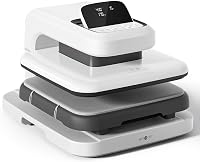
The best heat presses for hoodies and thick garments include the HTVRONT Auto Heat Press 2 15x15 for thick hoodie panels, the HTVRONT Auto Heat Press 15x15 for guided auto pressing, and the Delclynee 15x15 Slide-Out Clamshell for careful garment placement.
On this page (6 sections)
The best heat press for hoodies for most home crafters is the HTVRONT Auto Heat Press 2 15x15, which offers adjustable pressure and clearance for items up to 1.77 in high. This roundup compares hoodie presses by thickness capacity, platen area, and loading style, so you can match the machine to your transfer and workspace.
A hoodie asks more of a press than a flat T-shirt does. Fabric can bunch at the pocket, cuff, waistband, or neck seam, and a thick layer can keep the design area from resting evenly on the platen.
Start by measuring the transfer and the clear area on the garment. Then check whether the hoodie can load into the press without a pocket or seam crossing the design, and whether the machine has room to open or slide out.
For placement and pressing steps, use our guide on how to heat press a hoodie. Our heat press pressure guide explains how to set pressure for the material, and the 15 x 15 heat press picks cover more options at that size.
Our picks at a glance
-
1
-
2

-
3
 Best for careful garment placement
Delclynee 15x15 Slide-Out Clamshell
7.4/10 our score
See it on Amazon
- 4
 Check it
Delclynee 16x24 Slide-Out Clamshell
Best for oversized chest graphics - 5
 Check it
Fancierstudio 16x20 Pull-Out Press
Best for mid-size drawer loading - 6
 Best for fixed-platen big projectsCheck it
- 7
 Best for large-format clamshellsCheck it
- 8
 Check it
SmarketBuy 16x20 Clamshell Press
Best for fixed 16 x 20 work
Which heat press for hoodies suits your projects?
The right press depends on how thick the garment is, how large your artwork runs, and how you prefer to load it. These picks include automatic presses, slide-out models, and fixed-platen clamshells, each suited to a different work style.
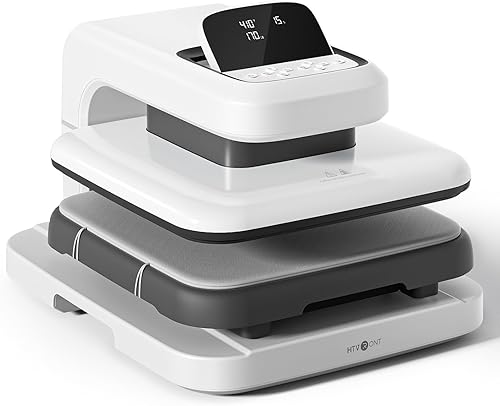
HTVRONT Auto Heat Press 2 15x15: Best for thick hoodie panels
- 15 x 15 in platen
- Adjustable pressure up to 170 lb
- Clearance for items up to 1.77 in high
- Automatic pressing and release
Adjustable pressure and increased height suit thicker garments, including hoodies. Automatic pressing and release can reduce the time you spend at the machine.
Pros
- Adjustable pressure up to 170 lb
- Clearance for thicker items
- Automatically releases when the timer ends
Cons
- 15 x 15 in platen may limit oversized designs
- Requires clearance for the moving press plate
The Auto Heat Press 2 is the strongest fit when hoodie thickness and pressure control matter most. HTVRONT gives this model clearance for items up to 1.77 in high and adjustable pressure up to 170 lb.
Its 15 x 15 in platen suits many chest designs, but wide or oversized graphics may need more area. The automatic cycle presses after you set the parameters, then releases the material when the timer ends.
Choose it for thick hoodie panels and a simpler cycle. Skip it if you mainly make wide artwork, or if your workspace cannot accommodate the moving press plate.
HTVRONT Auto Heat Press 15x15: Best for guided auto pressing
- 15 x 15 in platen
- Auto-adjusts for projects up to 1 in thick
- Slide-out work surface
- Automatic release
The press automatically adjusts for projects up to 1 in thick, then releases when the timer ends. Its slide-out surface keeps your hands farther from the heating plate while loading.
Pros
- Automatic thickness adjustment up to 1 in
- Slide-out work surface
- Auto release at the end of the timer
Cons
- Less clearance than the Auto Heat Press 2
- 15 x 15 in platen
This HTVRONT suits crafters who want an automatic cycle with slide-out loading. It adjusts automatically for projects up to 1 in thick, then releases at the end of the timer.
That height gives less room than the Auto Heat Press 2, so consider the hoodie’s pocket, seams, and folded fabric before choosing it. The 15 x 15 in platen is a practical match for many centered chest transfers.
Choose this press for garments within its thickness range and a guided workflow. Skip it if thick raised areas are common in your projects or your designs exceed the platen area.
Delclynee 15x15 Slide-Out Clamshell: Best for careful garment placement
- 15 x 15 in platen
- Lower platen pulls out 12.25 in
- Adjustable pressure
- Threadable workspace
The lower platen slides out 12.25 in to create a work area for loading garments. Adjustable pressure and a floating upper platen suit projects with uneven or thicker surfaces.
Pros
- Slide-out lower platen
- Adjustable pressure
- Threadable workspace
Cons
- Manual clamshell operation
- 15 x 15 in platen may limit large artwork
The Delclynee 15 x 15 is a good match when you want manual control and room to arrange a garment in front of the press. The lower platen extends 12.25 in, and the adjustable pressure and floating upper platen suit uneven or thicker surfaces.
The threadable workspace lets you position a single layer of fabric over the platen. That helps keep the back of the hoodie out of the pressing area while you work on the front.
Choose it if careful placement is more important than automatic pressing and your designs fit a 15 x 15 in area. Skip it for oversized graphics that need a wider platen.
For a comparison of press movement and loading approaches, see clamshell vs swing-away heat presses.
Delclynee 16x24 Slide-Out Clamshell: Best for oversized chest graphics
- 16 x 24 in platen
- Lower platen pulls out 12.25 in
- Adjustable pressure
- Floating upper platen
Its 16 x 24 in platen gives larger artwork more room, and the lower platen pulls out 12.25 in for loading. Adjustable pressure adds control when garment thickness varies.
Pros
- Largest platen in this roundup
- Slide-out lower platen
- Adjustable pressure
Cons
- Large platen needs a roomy work area
- Manual clamshell operation
The 16 x 24 in Delclynee suits large chest or back artwork that needs a broad flat area. Its lower platen extends 12.25 in, giving you a pulled-forward surface for garment placement, while pressure adjustment and a floating upper platen help with uneven substrates.
The larger size also means the machine needs a more generous work area. Measure the table and leave enough room for the lower platen to extend before setting up.
Choose it for wide designs and slide-out loading. Skip it if most of your work is small chest graphics or your workspace is tight.
Fancierstudio 16x20 Pull-Out Press: Best for mid-size drawer loading
- 16 x 20 in platen
- Lower platen pulls out 5.5 in
- Adjustable pressure
- Digital time and heat control
The 16 x 20 in platen gives designs more room than a 15 x 15 press, while its lower platen pulls out 5.5 in for loading. Adjustable pressure helps you set the press for different materials.
Pros
- 16 x 20 in platen
- Pull-out lower platen
- Adjustable pressure
Cons
- Shorter pull-out travel than the Delclynee presses
- Manual clamshell operation
The Fancierstudio offers a middle ground between 15 x 15 and 16 x 24 in presses. Its 16 x 20 in platen gives broader artwork room, and the lower platen pulls out 5.5 in to bring the garment toward you for loading.
It has adjustable pressure and electronic time and heat controls. A Teflon sheet is included, and the silicone pad is lightly glued for replacement.
Choose it if you want a pull-out work surface without moving up to a 16 x 24 in platen. Skip it if longer drawer travel is a priority, since the Delclynee models extend farther.
VEVOR 16x24 Clamshell Press: Best for fixed-platen big projects
- 16 x 24 in platen
- Adjustable pressure knob
- Digital time and temperature controls
- Audible timer alarm
A large 16 x 24 in platen and an adjustable pressure knob suit big flat designs. The clamshell layout uses a fixed lower platen, so plan how you'll load a thick garment.
Pros
- 16 x 24 in platen
- Adjustable pressure
- Digital controls and alarm
Cons
- Fixed lower platen
- Clamshell requires access around the open upper plate
This VEVOR is for large flat designs and buyers comfortable with a fixed lower platen. The 16 x 24 in work area and adjustable pressure knob leave room for broad graphics, while the digital board controls time and temperature.
With a fixed lower platen, you arrange the hoodie beneath the open clamshell. Plan space around the machine so you can load the garment and keep your hands clear of the heated upper plate.
Choose it if you want a large clamshell work area and manual garment placement. Skip it if you prefer loading with a slide-out platen.
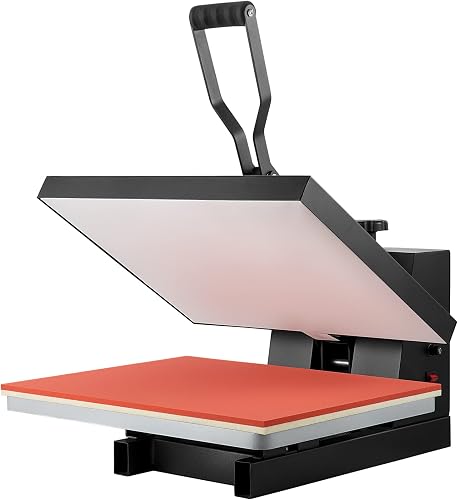
VEVOR 16x24 1700W Press: Best for large-format clamshells
- 16 x 24 in platen
- Adjustable pressure knob
- Digital time and temperature controls
- 1700 W
This 16 x 24 in VEVOR press pairs a large platen with a pressure knob that turns to suit different material thicknesses. It may fit buyers comparing basic large-format clamshell options.
Pros
- 16 x 24 in platen
- Adjustable pressure
- Digital timer and temperature controls
Cons
- Fixed lower platen
- Check the machine's dimensions and workspace before buying
This second VEVOR 16 x 24 press also pairs a large work area with a pressure knob and digital time and temperature controls. It is a large-format clamshell to compare when broad artwork matters more than drawer loading.
The fixed lower platen calls for placing the hoodie under the open upper plate. Check your table dimensions and the room needed to open the clamshell before buying.
Choose it for large designs when you are comfortable with fixed-platen loading. Skip it if a pulled-forward surface would make garment placement easier.
SmarketBuy 16x20 Clamshell Press: Best for fixed 16 x 20 work
- 16 x 20 in platen
- Adjustable pressure knob
- Digital temperature and timer controls
- 1700 W
The 16 x 20 in platen fits larger flat artwork, and the pressure knob adjusts for different material thicknesses. Its clamshell design keeps the lower platen fixed during loading.
Pros
- 16 x 20 in platen
- Adjustable pressure
- Digital timer and temperature controls
Cons
- Fixed lower platen
- Clamshell needs open space above the work surface
The SmarketBuy fits buyers who want more room than a 15 x 15 in press, but do not need the 16 x 24 in format. It has a 16 x 20 in platen, adjustable pressure, and digital temperature and timer controls.
Its lower platen stays fixed, so you load the garment beneath the open upper plate. Leave space above and around the press for that movement.
Choose it for flat 16 x 20 in projects when a fixed clamshell suits your routine. Skip it if you want a slide-out work surface; the Fancierstudio is a pull-out option at a similar platen size.
How do you choose the best heat press for hoodies?
The best heat press for hoodies gives your design enough flat platen area, accommodates the garment’s thickest section, and lets you load it safely. Start with the garment and transfer measurements, then narrow your options by clearance and machine layout.
How much platen space does a hoodie design need?
A 15 x 15 in platen can work for many centered chest designs, while 16 x 20 and 16 x 24 in platens provide more room for broad artwork. Measure the transfer and the flat panel, allowing space around seams and pockets.
The platen size alone does not tell you whether a design will fit cleanly. A hoodie may have a smaller usable area than its overall front panel because of a pocket, zipper, seam, or hood.
Also account for the machine’s footprint and movement. A slide-out platen needs room to extend, while a clamshell needs overhead clearance to open.
How much clearance does a hoodie need?
Clearance matters when the body, pocket, or layered fabric is thick. Compare the press’s stated project height with the thickest area you plan to press, and remember that a raised seam under the transfer can still create an uneven surface.
The Auto Heat Press 2 allows items up to 1.77 in high, while the other HTVRONT auto press adjusts for projects up to 1 in thick. The Delclynee slide-out presses use an adjustable pressure knob and floating upper platen for uneven or thicker surfaces.
Choose a press based on the actual area under the design, not the hoodie’s full thickness at a cuff or folded edge. Keep raised seams and pockets outside the transfer zone when possible.
Is slide-out loading worth choosing?
A slide-out platen brings the work surface toward you, which can make arranging bulky garments easier. The Delclynee models extend 12.25 in, while the Fancierstudio extends 5.5 in.
Fixed-platen clamshells can still press hoodies, but you place the garment under the open upper plate. Pick the layout you can operate comfortably in your available space, and leave room to move the garment in and out.
Do you need adjustable pressure for hoodie transfers?
Adjustable pressure is useful when you work with materials or garments of different thicknesses. It lets you set the press for the job, but the correct setting depends on the transfer method and its instructions.
Do not assume a hoodie always needs more pressure than a T-shirt. A bulky seam or pocket changes the surface under the platen; reposition the garment or use a heat press pillow to raise the design area above that obstruction.
See our guide to heat press pillows for help with seams, pockets, and other raised areas.
How should you set up a heat press for a hoodie?
Set up the press on a stable work surface with enough room for its platen and loading mechanism to move. Before you turn it on, make sure the garment can lie flat and the transfer can sit on an unobstructed area.
Start with the transfer maker’s temperature, time, and pressure instructions. Set the press to those directions rather than relying on a general hoodie setting, since transfer type and garment material affect the required process.
Thread the hoodie over the lower platen when the press allows it, so only one layer of fabric sits under the design. Smooth out wrinkles, move the pocket and seams clear, and check the transfer position before pressing.
Allow the machine to reach the target temperature, then follow its normal operating steps. Keep hands away from the heated plate, and stay near the press while the cycle runs so you can respond when the timer ends.
What mistakes can spoil a hoodie transfer?
The most common avoidable problems come from pressing over thick seams, using a platen that is too small, or setting the press without following the transfer instructions. A few checks before the cycle can prevent placement and coverage problems.
Do not let a pocket edge, zipper, cuff, or thick seam sit under the artwork. Those raised areas can interfere with a flat pressing surface, so shift the design or support it with a pillow as appropriate.
Avoid stretching the hoodie while positioning it. Smooth the fabric without pulling it out of shape, then check that the transfer is straight and clear of the seams.
Do not assume a larger platen solves every problem. The design still needs a flat garment area, and the machine needs enough clearance around it for loading and operation.
Finally, do not use one temperature and time for every material. Check the transfer and garment care guidance each time you change materials or methods.
How do you care for a heat press used on hoodies?
Let the press cool according to its instructions before cleaning or moving it. Keep the platen and lower pad clear of lint, transfer residue, and loose fabric so the next garment can sit flat.
Use a protective sheet only when the transfer instructions call for one. The Fancierstudio includes a Teflon sheet, but other presses may require you to choose an appropriate cover separately.
Store the press with its moving parts in a safe position and avoid placing heavy items on the platen or pad. Check the manufacturer’s care guidance for model-specific cleaning and maintenance steps.
Which heat press should you choose for hoodies?
Choose the HTVRONT Auto Heat Press 2 if thicker panels and automatic operation are priorities. Pick the Delclynee 16 x 24 for oversized artwork with slide-out loading, or the Fancierstudio 16 x 20 for a mid-size platen and pull-out surface.
If you prefer a fixed lower platen, compare the VEVOR and SmarketBuy clamshells by size and available table space. Measure the transfer and hoodie panel first, then follow the transfer maker’s settings and use our hoodie pressing steps to guide placement.
Our top 3 picks at a glance
-
1
-
2
-
3
Best for careful garment placement
Delclynee 15x15 Slide-Out Clamshell
7.4/10 our score
See it on Amazon
Frequently asked questions
What makes a heat press suitable for hoodies?
Choose a press with enough clearance for the hoodie’s thickest area and a platen that fits your design. Adjustable pressure helps you follow the transfer maker’s instructions for the garment.
Is a 15x15 heat press large enough for a hoodie?
A 15 x 15 in platen suits many centered chest designs, but may not cover wide artwork in one press. Measure the transfer and the hoodie’s flat panel, then compare both with the usable platen area.
For broader designs, consider a 16 x 20 or 16 x 24 in press.
Do hoodies need more pressure than T-shirts?
Not automatically. Pressure depends on the transfer material, garment, seams, and press, so follow the transfer maker’s instructions and adjust the machine accordingly.
A thick seam or pocket can make the surface uneven; a heat press pillow can lift the design area above those obstructions.
Are slide-out heat presses easier to load?
A slide-out lower platen brings the garment toward you, leaving room to arrange it away from the upper heating plate. That can help when positioning a bulky hoodie.
Check the drawer travel and the space around the press so the platen can extend fully.